


- Abby McCuaig
- Oct 29, 2025
- 4 min read

After months of building through summer and early autumn, it’s time to shift gears. The next twelve weeks are all about refinement - tightening, toning, and revealing the muscle that’s been building underneath.
We’ve spent the past few months focused on growth - eating more, lifting heavy, and letting my body fill out. Now begins the next process: slowly pulling back on food, increasing cardio, and watching the shape underneath start to come through. Hopefully, we start to see some of that summer growth pop through the surface.
This twelve-week phase is really about seeing where my foundation stands before heading into the next level of training. I want to get a clear picture of my physique - what’s working, what needs attention, and how my shape aligns with the bikini division criteria. This isn’t a show prep just yet, but it’s like my “primer phase” - a chance to see how my body responds as we fine-tune conditioning before heading into prep mode again.

The Game Plan
This phase is all about slow, steady refinement - not sudden change. The goal is to guide my body toward a leaner, tighter look while keeping strength, energy, and recovery intact. By increasing cardio gradually and reducing food in small steps, I’m giving my body time to adapt instead of forcing it to react.
Cardio: 30 minutes, six times per week (~200–250 calories)
Steps: 10,000 per day
Water intake: ~3L per day
Most days, I like to get at least half of my cardio done after my morning lift. There’s something grounding about those sessions it's like the hum of the treadmill, the soft glow of the gym lights, and the rhythm of my breath syncing with the incline. It’s one of the few moments of the day where I can truly zone out, focus inward, and just feel my body working.
On days I’m training heavy legs, I’ll keep my cardio lighter or split it into two shorter sessions. If I need a break from the gym atmosphere, I’ll hop on my step pad or bike at home to hit my movement goals while staying gentle on recovery. It’s about balance - not punishment.
I’m also paying close attention to recovery markers: how I’m sleeping, how sore I feel, and how my energy levels respond. Those little cues help me know when to push and when to pull back. The structure itself feels like an anchor - a way to build trust with myself through consistent action. Every box I tick is another reminder that progress doesn’t come from extremes; it comes from showing up.
It’s funny how motivation shifts between phases. During building season, progress feels more hidden - you know you’re improving, but the results sit quietly underneath. Now that we’re leaning out, I can literally *see* the work that’s been done, and it’s exciting. Each bit of definition that starts to show helps me understand what’s developing well and what still needs refining to match the balanced, symmetrical look that the bikini category calls for.
It’s easy to dwell on how much there is still to do, but I’m keeping my eyes on the bigger picture - beating my past self, staying consistent, and celebrating how far I’ve already come. I need to remind myself, I’m in the best shape of my life right now, and I’m proud of the way things have grown and shaped this year.
What’s changed most for me this time is my mindset. I’m not chasing extremes, I’m chasing longevity. The structure, the habits, the calm focus - they all feel more sustainable now. I’m finally starting to feel like I belong in this athlete rhythm rather than just chasing it.
Measurements & Focus Areas
My latest check-in measurements showed great upper-body progress and a tighter waistline - exactly what I was hoping for at this stage. Shoulders are 38 inches, waist at 26.5 and hips/glutes at 38 inches. I'm sitting at about 118 lbs but keeping the focus on how things look instead of obsessing over the number on the scale.
Personally, I’d love to see more tightening through my midsection and legs. My lower body tends to hold onto fat longer; I’ve always carried most of my weight through my thighs and glutes. It gives me that natural curve, but true “bikini glutes” come from sculpted shape and muscle separation, not just fullness. So that’s where my focus is now: tightening, shaping, and polishing.
Now, as the calories start to come down, I don’t do anything drastic - just small, mindful swaps that add up. Here are a few easy ones I use:
Oat milk → almond milk: from ~150 cals per serving to just 30
Sugar → stevia or monk fruit: keeps things sweet without the crash
Fewer drinks and lattes: I swap flavoured drinks for black coffee or low cal kombucha
Lean vegan proteins: more tofu, tempeh, and seitan over higher-fat meat alternatives
Little tweaks like these help me stay on track without feeling restricted.
Currently Listening To
Lately I’ve been queuing up podcasts that keep my head in the game while I’m doing cardio or getting my steps in. I love the Self-Selecting Podcast by Cory Hageman, the new Stage Talk Podcast by Phoebe Hagan and Corey Lindner as well as the ever-informative Bikini and the Brain by Ashley Kaltwasser and Adam Bonilla.

I find listening to the pros and coaches really motivating - hearing how they navigate their own training and mindset always gives me something to reflect on. Sometimes it’s just a small comment or story that clicks, and suddenly I see a new perspective on my own progress.
Looking Ahead
This next stretch isn’t just about losing fat - it’s about uncovering the work that’s been done, both physically and mentally. Every phase teaches me something new about patience, balance, and consistency. The next twelve weeks are simply another chapter and I’m excited to see how this one unfolds.

- Abby McCuaig
- Oct 24, 2025
- 4 min read

If you’ve ever been curious about plant-based proteins but assumed they’re all flavourless or taste too much like rabbit food - let me introduce you to seitan. Pronounced *say-tan*, this mighty wheat-based protein is turning heads - and not just in vegan circles. Think of it as the ultimate plant-powered meat swap: satisfying, protein-packed, and surprisingly versatile.
The first time I tried it I had already been plant-based for a number of years and still, I couldn’t believe it wasn’t chicken. That chewy, hearty texture, the way it pulled apart like shredded meat - that’s when I realized there’s a lot more going on with seitan than just being ‘vegan meat'.
What is Seitan (Really)
Seitan is often called “wheat meat,” and that’s pretty accurate; it’s a protein-rich food made entirely from wheat gluten. Gluten is the protein naturally found in wheat, and when the starch and bran are washed away, what remains is a dense, elastic protein mass. This is what we call seitan.
Its unique texture is what makes it so appealing. Unlike tofu or tempeh, which can be soft or grainy, seitan is chewy, firm, and meaty, making it a natural substitute for chicken, beef, pork, or even seafood in certain dishes. Its ability to mimic the texture of cooked meat is why it’s been embraced in vegetarian and vegan cooking for centuries.
Seitan is incredibly versatile:
Flavor absorption: On its own, seitan has a neutral taste, which means it takes on the flavors of whatever it’s cooked with—marinades, spices, sauces, or broths.
Cooking flexibility: You can boil, simmer, bake, roast, sauté, or grill it. It holds its shape and texture under heat, making it suitable for stir-fries, stews, sandwiches, skewers, or tacos.
Forms and styles: You can shape seitan into cutlets, strips, chunks, or even crumble it for taco fillings or sandwich “pulled” meat. Some preparations include added ingredients like soy sauce, nutritional yeast, or vegetables for extra flavor and complexity.
Historically, seitan dates back over a thousand years and was popularized in East Asian vegetarian cuisine, particularly within Buddhist traditions. It was often served as a protein alternative during periods of vegetarian observance, providing a hearty, filling, and protein-rich component to meals.
From a nutritional perspective, seitan is a protein powerhouse. Unlike most plant foods, it contains a high concentration of protein with very little fat, and it’s also low in carbohydrates. This makes it particularly appealing for athletes, bodybuilders, or anyone looking to meet daily protein goals without relying on animal products.
So essentially, seitan is a plant-based protein with a meat-like texture, an adaptable flavour profile, and a centuries-old history of nourishing people looking for a hearty, satisfying source of protein. It’s the ultimate chameleon in the plant-based protein world: neutral enough to blend seamlessly into dishes, but substantial enough to stand on its own as the centerpiece of a meal.
Nutrition: Why It Matters for Fitness
Seitan packs serious protein and essential nutrients, making it a smart choice for anyone focused on muscle growth, recovery, and strength.
Protein & Macro Profile
A ¼ cup (28 g) of vital wheat gluten has ~21 g of protein.
2 ounces (~57 g) of crumbled seitan provides ~17 g of protein with very low fat and carbs.
Some processed seitan formulations reach ~24 g protein per 100 g — comparable to turkey breast.
This makes it ideal for fueling workouts, supporting muscle maintenance, and meeting high-protein goals.
Other Nutrients & Considerations
* Low in fat and moderate in carbs.
* Contains iron and minerals like selenium.
* Not suitable for those with celiac disease or gluten sensitivity.
Environmental & Sustainability Benefits
Seitan isn’t just good for your body—it’s better for the planet.
Producing 100 kg of seitan emits ~46.6 kg CO₂e, compared to ~6,000 kg for beef.
Plant-based meat substitutes generally have 50% lower environmental impact than conventional meat.
Life-cycle assessments show seitan requires significantly less water and land than animal proteins.
According to research published in Nature Food, producing plant-based protein sources like seitan emits up to 90% less greenhouse gas than beef and uses drastically less land and water. Nutritional analyses from the USDA show seitan’s protein density rivals lean meats, with fewer saturated fats and no cholesterol.
For athletes and fitness enthusiasts who care about sustainability, integrating seitan into your diet allows you to reduce your environmental footprint without compromising on protein or performance. Even a few plant-based meals per week can have a measurable impact.
Taste & Texture: Why It Works
Seitan’s chewy, meaty texture and neutral flavor make it a natural substitute for meat in almost any dish. Marinate it, sauté it, grill it, or simmer it in sauces - it will absorb flavours beautifully.
It’s a great “bridge food” for those who want to eat more plant-based meals without sacrificing satisfaction. The texture is so convincing that non-vegans often report enjoying it as much (or even more) than traditional meat, especially in dishes like tacos, stir-fries, and sandwiches.
Recipes to Try
To start you off I suggest trying some tried and true recipes that have been created and used by the best. Personally I started using the Lupini Bean seitan recipe from Natalie Matthews (aka @FitVeganChef) about three years ago and it has been a go-to in this household ever since!
Easiest Seitan Recipe from It Doesn't Taste Like Chicken - perfect for beginners
Lupini Bean Seitan by Fit Vegan Chef - high-protein and meal-prep friendly
Basic Homemade Seitan by Yup, it's Vegan - a customizable staple you can tweak endlessly
Once you find a method that works for you, it's easy to customize the flavourings to your personal taste by using marinades and sauces, similar to how you would with animal meat.
Tips for Success
Marinate: Seitan absorbs flavour like a sponge.
Cook slowly: Simmer, roast, or grill for best texture.
Experiment: Slice thin for stir-fries, chunk for stews, shred for sandwiches.
Track macros: For athletes, weigh portions to ensure protein targets are met.
Even if you’re not fully plant-based, seitan is worth a try: It’s a bridge food or a comfort-food you might come to call it, capable while being better for the planet and your protein goals.
- Abby McCuaig
- Oct 23, 2025
- 7 min read
Updated: Dec 7, 2025
Twenty years ago, if you told someone you were building muscle on a plant-based diet, you’d likely be met with confusion or skepticism. The idea that athletes could perform - let alone excel - without animal protein was practically unthinkable. Comments like “you’ll never get enough protein” or “plants don’t have complete amino acids” were common refrains from trainers, dieticians, and even gym peers. Many of us were the dinner time joke or had a family figure/friend who continuously made comments.
Back then, the conversation around plant-based diets was dominated by misconceptions. Vegan athletes were imagined to be weak, frail, or constantly fatigued. Social media wasn’t as prevalent, and there were far fewer resources or role models to show that strength and compassion could coexist. Many assumed animal protein was essential for serious muscle development.
Fast forward to today, and the narrative has completely changed. Vegan athletes are breaking world records, winning bodybuilding shows, and rewriting what performance looks like when fueled by compassion and sustainability. The evolution of plant-based protein - from chalky, single-source powders to sophisticated multi-source blends - has been nothing short of revolutionary.
As someone who has spent years advocating for animals and went vegetarian at the early age of fourteen - I’ve seen firsthand how powerful this shift has been. I remember the cardboard flavoured 'burgers' all too well and I can't even begin to express how far the vegan cheese realm has come, even in just the last five years!

Early Plant-Based Protein Powders: The Chalky Era
Before plant-based eating went mainstream, options were extremely limited. Early protein powders were often single-source - mostly soy or hemp - and even the chocolate or vanilla flavours tasted like sand. Digestibility was inconsistent, and the shakes often left you feeling bloated or unsatisfied.
The myth that “you can’t build muscle on plants” was built into the products themselves. Vegan protein was marketed as a secondary option - something more ethical maybe, but not performance-driven.
Personal Connection: Growing Up With Animals
My connection to animals started on a farm. I grew up surrounded by farmland, helping care for pigs and lambs our family rented out land to. I learned the rhythms of their lives: the sound of the lambs calling at sunrise, the way pigs pressed their snouts into my hands, the quiet joy of morning feeding. These moments taught me empathy, patience, and a profound respect for life.
At the same time, I became aware of the darker side of animal agriculture - the confined spaces, the early slaughter ages, the suffering hidden from sight. Chickens in factory farms live only 6–7 weeks, cows in dairy systems often only 4–5 years, and pigs sometimes less than 6 months. Witnessing these realities - being a part of the process - was difficult but pivotal in shaping my personal values.
This tension between love for the animals I knew and care for their welfare versus awareness of systemic harm stayed with me into adulthood. So when I finally decided to start strength training, choosing plant-based protein wasn’t just about fitness; it was about living in alignment with my ethics. Every shake, meal, or snack became a conscious choice: strength built without compromise, performance fuelled by compassion.
The Turning Point: When Science Met Sustainability
Over the last decade, the conversations around plant-based protein began to shift. Researchers started taking amino acid profiles and digestibility more seriously. Studies showed that pea, brown rice, and other plant sources could stimulate muscle protein synthesis just as effectively as whey when consumed in adequate amounts.
This scientific validation led to a new era for plant-based athletes. Brands began experimenting with multi-source blends - pea, brown rice, pumpkin seed, chia, and quinoa - chosen to complement each other’s amino acid profiles. Suddenly, a vegan protein shake could offer all nine essential amino acids in a single serving, a breakthrough for serious athletes.
Texture improved, flavors expanded, and digestibility skyrocketed. For athletes, this was a game-changer. The broader impact is significant, too: these innovations have allowed more people, not just elite athletes, to access sustainable, high-quality protein. Schools, gyms, and even mainstream supermarkets now carry products that would have been unthinkable a decade ago.

Famous Vegan Athletes Leading the Way
Over the last twenty years, vegan athletes have reshaped the conversation around plant-based diets and performance. From tracks and courts to gyms and stages, they’ve challenged old assumptions, showing that strength, endurance, and peak aesthetics can be built entirely on plants. Beyond breaking records and winning competitions, these athletes inspire a new generation to see veganism as a legitimate, empowering, and high-performing lifestyle choice.
Venus Williams – Tennis legend, maintaining elite performance in her 40s.
Lewis Hamilton – Multiple F1 World Champion, credits plant-based eating for recovery and mental clarity.
Torre Washington – Professional bodybuilder, showing peak aesthetics on plants.
Patrik Baboumian – World-record-holding strongman proving extreme strength on vegan nutrition.
Kendrick Farris – Olympic weightlifter competing at the highest level on plants.
Their successes highlight a central truth: plant-based protein supports strength, endurance, and recovery while staying fully aligned with your values. Athletes following plant-based diets are proving that you can reach peak performance, push your limits, and recover effectively without compromising on ethics or sustainability. Every record broken and every goal achieved by these trailblazers reinforces that plant-powered nutrition is a serious choice for anyone striving to perform at their best.
Why Plant-Based Protein Matters for Ethics and the Environment
Behind the scenes of the meat and dairy industry, billions of animals live shockingly short and often painful lives. Most chickens raised for meat live only 6–7 weeks. Dairy cows - animals who could naturally live 20+ years, are usually kept just 4–5 years. Pigs, who are as intelligent as dogs and just as emotionally complex, are slaughtered at around 6 months.
When you know that, choosing plant protein becomes more than a nutrition decision, it becomes a quiet, consistent refusal to participate in that system. A vote for compassion every time you eat.
The environmental footprint of animal protein is massive and honestly, it’s hard to ignore once you see the comparison. Producing 1 kg of beef releases around 60 kg of CO₂, while 1 kg of peas generates less than 1 kg. Water tells a similar story: beef requires roughly 15,000 liters, while legumes need about 1,500.
And then there’s land. Animal agriculture takes up enormous space, contributing to deforestation, habitat loss, and declining wildlife populations. Plant proteins? They use a fraction of that land and leave far more room for ecosystems to thrive.
Innovation on the Rise
The plant-based protein space is evolving faster than ever. Fermentation-based proteins, functional adaptogens, probiotics, and sustainability-first formulas are now common. The focus has shifted from “is it possible?” to “how can we make it even better?”
These innovations make high-quality, ethical nutrition accessible to everyone, from elite athletes to everyday gym-goers. Plant-based protein is no longer niche or weird, it’s mainstream (perhaps, even annoyingly so), optimized, and constantly improving.
The Future of Protein
Plant-based protein has established itself as a significant part of the next steps towards sustainable, ethical, high-performance nutrition. From precision fermentation to algae-based blends, companies are optimizing for health, ethics, and performance simultaneously. Athletes embracing this shift perform at peak levels while also contributing to a movement where strength, compassion, and sustainability coexist.
In the years ahead, plant-based protein will only continue to improve with better formulations, cleaner ingredients, more complete amino acid profiles, and greater accessibility worldwide. For athletes, this shift represents an unprecedented opportunity to fuel performance while supporting a more ethical and sustainable future.
Recommended Vegan Protein Products
These are the products I personally use and love; the ones that reliably fuel my workouts, help with recovery, and taste good enough to actually look forward to. That said, everyone’s body, goals, and flavor preferences are different, so I always encourage experimenting and using these powders in addition to whole-food options like beans, lentils, tofu, or nuts.
Finding the combination that works for you is part of the fun: whether it’s a smoothie, oats, or a post-workout shake, plant-based protein can be both versatile and delicious.


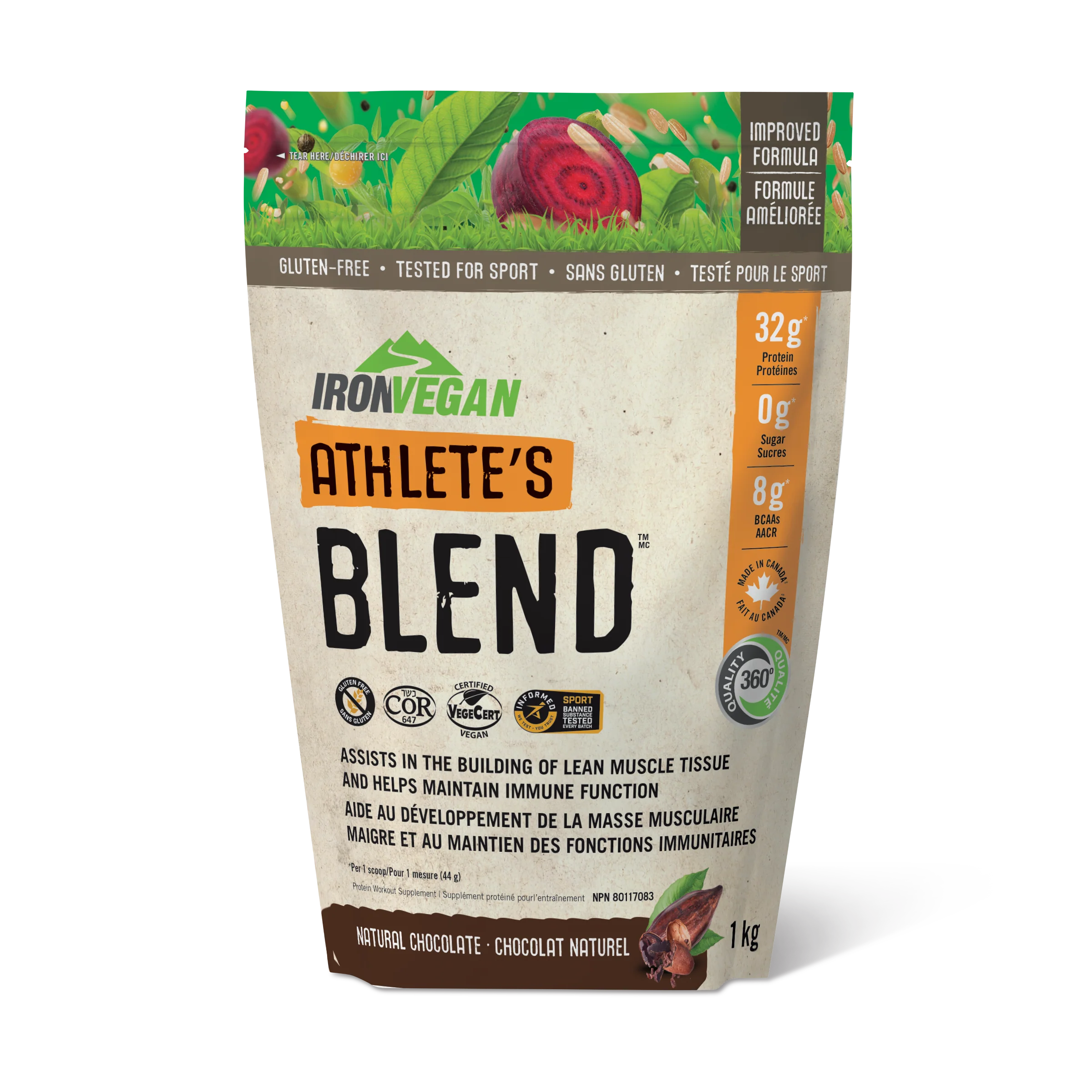


For myself, the Vega Sport Protein Peanut Butter Flavour mixed into oats has become a sweet treat I genuinely look forward to, while their berry flavours make smoothies effortless and delicious.
Simple Ways to Add More Plant-Based Protein
Adding plant-based protein into your day doesn’t have to feel like a big overhaul. Sometimes, it’s as simple as one swap: lentils instead of ground beef in your pasta sauce, a tofu scramble instead of eggs, or chickpeas tossed into a salad or wrap. Tiny changes like these add up quickly and make your meals more filling and satisfying without any extra stress.
Breakfast is a great place to start. You can boost protein by sprinkling hemp hearts or chia seeds into your oats, stirring in a spoonful of nut butter, or blending silken tofu or plant protein powder into a smoothie. These little tweaks make your morning meal more nourishing and help you stay energized through the day.
Keep convenient protein snacks around so you’re never reaching for empty calories. Roasted chickpeas, edamame, mixed nuts, or a plant-based protein bar make it easy to grab something wholesome when life gets busy. You can also build your main meals around a protein source first, then add veggies, grains, and flavor: think tofu with stir-fried vegetables, tempeh tacos, black bean bowls, or a hearty lentil curry.
Finally, don’t be afraid to experiment. Try one new plant protein each week: tempeh, seitan, lentil pasta, or a different tofu texture and batch cook at least one protein-rich dish for the week. Having a chickpea curry, lentil stew, or tofu bake ready in the fridge makes choosing a nourishing meal effortless. Over time, these small habits become second nature, making plant-based protein a simple, satisfying part of your lifestyle.
Choosing plant protein is so much more than a simple dietary decision, it’s also a long-term investment in your health, the planet, and the animals we share it with. Strength can be built responsibly, ethically, and deliciously… and the best time to start is now.


_edited.jpg)

.jpg)